Tuesday, December 14, 2021

Agility 1, Week 1

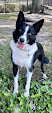
Jackie began regular Agility 1 class today! Our homework this week includes continuing to work on contact 2o2o behavior, continuing to reinforce 1,2,3, go game, and proofing our stay-to-release.

The first way to proof a stay is by having the dog "Sit!" then mark and treat. Then "Sit, wait" and take one step and release "Break!" and treat. Build up to I'm walking away several meters and having Jackie stay for varying amounts of time with varying distractions such as toys, food, or other dogs.  

Today we worked on driving a mini-course of a straight line of three hoops with "Break! Go! Go!" as well as a mini-course of two hoops and a left turn while the dog is on the handler's right side "Break!" "Here!" Remember to say "Here!" only once, and in general the less chatter from from the handler, the better.

We also played a mini course of hoop, tunnel, hoop. The handler must trust the dog to go into the tunnel, and keep moving forward while driving the dog.  I must be sure to point accurately at the tunnel mouth where I want to aim Jackie to enter.

Jackie hooping it up


Pearls:
  • Homework includes proofing startlines and 1,2,3, Go game
  • Contact behavior is coming along nicely
  • Less handler chatter, the better; when you say something, it should mean something
  • Point accurately at the tunnel enterance 

The "Adopt Don't Shop" Conundrum

I strongly support rescue.  Of course I do.  I've never had a dog that wasn't either given to me by someone or adopted from a breed rescue. Most dog lovers, including ethical breeders, support the idea of ending suffering and neglect for all dogs as well.  

I admit to loving purebred dogs such as Border collies, Australian shepherds, and Cocker spaniels, and I realize there is an element of hypocrisy in desiring the traits of a wonderful purebred dog but never writing a check to an ethical breeder who works to humanely and carefully produce these purebred dogs. On the other hand, as long as my preferred type of dog continues to be neglected and abanded to end up in shelters, I plan to continue offering a home to these otherwise discarded dogs. 

Yes, there is a selfish motive in there: that I end up having a dog with characteristics that appeal to me.  If it weren't for some breeder, somewhere, my dog wouldn't exist. But also yes: I'm committed to the idea that I'm giving a do-over dog that someone else discarded a second chance. I want my cake and eat it too. I am grateful when I discover an ethical breeder doing a good job of painstakingly producing high-quality, talented, and healthy purebred puppies from high-quality, talented, healthy, and health-tested breeding stock. 

Having my Border collie Jackie in my life is the result of rescue and I'm grateful to the body of rescue workers who personally sacrifice so much to help dogs like Jackie every day. A friend of mine responded well-meaningly to a recent post with the familiar phrase "Adopt, don't shop!" I have mixed feelings about this sentiment and want to explore the idea further.

Let's follow the phrase "Adopt, don't shop" through to its logical conclusion: if all that the supporters of rescue (of which I am one) wish to come true actually happens, that every dog on earth finds a loving forever home or other meaningful career, is prevented from reproducing and lives happily and healthily all the days of each dog's life, and all the cruel puppy mills and unethical backyard breeders are shut, we as dog lovers would suffer a severe shortage of dogs.  And that's not necessarily a bad conclusion as long as there were other humane, sustainable, and cruelty-free sources of procuring a dog.

I support the ethical breeding of dogs as well as rescue.  Ethical breeders who are educated and passionate about their dogs, who breed only a limited number of litters in a lifetime, and those only after having tested for temperament, health, hips, eyes, joints including patellas, genetic proclivity to passing on desirable (and culling the undesirable) heritable traits, heart disease, etceteras; and who have a vested interest in proving their dogs can have viable careers by showing, trialing, titling, and otherwise training their breeding stock with some form of meaningful markers of achievement. 

But now let's say that ethical breeders become our sole source of procuring a dog, for pet, sport, support, service, or the myriad of other careers dogs are capable and wonderful at performing and adding to our lives. Ethical breeders who do all the minimum of pertinent health testing: raise their dogs in an appropriate environment, giving the correct and critical enrichment, care, veterinary needs, and early training that it takes to raise a litter of puppies, as well as maintaining breeding stock to these exacting standards, and breeders who carefully screen the homes into which their puppies are moving to be sure the dog will have a good life with all the essential resources for ongoing enrichment and veterinary care; necessarily these ethical breeders have to charge a minimum of several hundred dollars per dog as the adoption fee, and realistically upwards of several thousands of dollars per dog as the adoption fee.

Then where does that leave the average Jane who wants a dog, or maybe a couple, as a pet, for sport, for all the endless list of pure good that dogs bring into humans' lives? It starts to feel a bit like elite horse-keeping.  

As an aside-- even the rankest of rescue horses such as PMU mares or offspring, the OTTB ex-racers, the broken-down cart horses who end up at auction barns (I have loved and ridden all of these examples over my lifetime), cost at least several hundred to a couple thousand dollars to acquire, never mind the never-ending upkeep costs that continue from day one. If someone just wants a basically sound backyard quality horse that is saddle-trained, expect to pay more than a couple grand on up to tens of thousands. Having a horse is relatively demanding from a resource perspective. Is this the direction we want to move with dogs?  Perhaps.

Is this what the dog-loving community truly wants though? Is this in the best interest of our canine companions?  Maybe it is.  I don't know the answer. What I do know is that a subject with so much passion, effort, and resources, such as breeding, such as rescue, such as keeping dogs for pets, companions, sport, or any other career, or simply from pure genuine love of a dog, is not so simply boiled down to a single phrase of "Adopt, don't shop."

It occurs to me that in the meantime, unethical backyard breeders are selling puppies to less-prepared folks. Dogs that have shortened or otherwise uncomfortable lives due to health or behavioral issues because these backyard breeders, while possibly well-meaning, and who may even maintain the sire and dam in great conditions but fail to test for temperament or health issues, are producing dogs that have a fair likelihood of being abandoned by their purchasers after the offspring are no longer cute puppies and become a burden to these less-well-prepped dog owners at worst, or at best of not living quality, long, healthy lives.  There are still scores of dogs that end up in shelters, like my own Jackie did, with no owner to come for them and in very rough shape mentally and physically. Hateful puppy mills with dogs in the worst imaginable of living horrors are unfortunately still doing business. All these dogs need and deserve a loving outcome.

So yeah, adopt don't shop. If and when we ever get to a dog shortage and find ourselves in a world where only an elite few can afford dogs, maybe all of us do-gooder rescue types will rue the day.  Or maybe not, maybe we'll celebrate.  But in the meantime, until such time as the shelters are empty and the rescuers can take a break from working in the trenches of abject neglect (and worse) that they pluck dogs from every day, I will continue to support both rescue and ethical breeding.  For me and my house, I have had tremendous success adopting dogs from breed rescue, and find that rescue is the best balance for my personal odyssey. 

My opinion is that I just don't picture myself purchasing a great dog from an ethical breeder that is producing quality dogs using principled methods when I can offer a home to the stray or abused shelter dog, even if it is likely that the health and/or temperament of these abandoned dogs may be sub-par to those of their ethically and knowledgeably produced brethren. Does this put me at a training disadvantage? At a competitive disadvantage? At an emotional disadvantage if disease or shortened lifespan reaches out an ugly hand to the dog I love and consider my family? Yes, probably it does.  But if I forfeit this advantage to help a dog in need, then it is forfeit. 

How often has a dog helped me when I am in need? The answer is always.


Pearls:

  • Most dog lovers agree that suffering and neglect are worth struggling to end, and the best ways to end unwanted, unhealthy litters as well as to protect dogs from neglect is worth discussing 
  • "Adopt, don't shop!" Ok maybe, but we should consider all angles
  • For my part, adoption has worked well; yet I admit I love purebred dogs, and it occurs to me they don't grow on trees; until suffering has ended and shelters are empty, I'll continue to adopt from reputable rescue organizations
  • Further contemplation and discussion on this subject seems like a good idea

My current three adopted kids


The ashes or grave markers of my previous four kids, all were adopted and loved beyond measure
  • Buffy, a purebred Cocker spaniel given to me by my parents.  Buffy passed from geriatric renal failure at 13 years.
  • Scarlett, a purebred Cocker spaniel, adopted from a breed rescue. Scarlett was a former puppy mill breeding dog but lived several happy, well-loved years with us. She succumbed to hemangiosarcoma cancer at the approximate age of 6.
  • Roo, a purebred Australian shepherd, given to me by a friend in grad school. Roo succumbed to hemangiosarcoma cancer at age 8, exactly one year to the day from Scarlett.
  • And finally, our dear Prissy, my first ever purebred Border collie given to me by my friend Patricia who rescued Prissy from neglect. Prissy lived a healthy 16 years and finally passed due to rapid-onset geriatric organ failure.

Monday, December 13, 2021

Agility Contact Workshop, Part 1

Jackie and I successfully participated this Saturday in the Contact Workshop, Part 1 at Cowtown Dog Sports.  The focus was on understanding what stopped contact training is, and how best to train for optimum contact behaviors in the agility ring.

Our coach Robin Barber started the seminar with some background theory about what contacts are and why stopped contacts are good for a number of reasons. Stopped contact behavior, also known as two-on-two-off (or 2o2o), is when the dog goes over the teeter, A frame, or dog walk (the three contact obstacles in agility) and positions themself with two front paws straight on the ground off the end of the board with two hind legs on the board and the dog's weight transfered onto the hind end. The benefits of training a stopped contact include the following: 

Safety for the dog: transfering weight to the rear helps prevent injury, and once a behavior is more clearly understood, the dog gains speed and fluincy which also increases safety. Transferring weight to the hindquarters also helps to lessen the impact on the shoulders and back when descending the A-frame and helps the dog to stay centered in contact with the dogwalk down ramp if she descends rapidly. Stopped contacts allow the handler to catch up with their dog in an already fast-paced game. If the dog pauses at the end of the contact obstacle, this allows the handler to catch up and re-connect with their dog. Finally, stopped contacts make it obvious to the judge that the dog has indeed hit the contact zone; "never make the judge think."

Foundations for training contacts include teaching the dog to drive to a target plate "Feet!" and building value for two-on-two-off behavior at the end of a training plank.

Jackie demonstrating understanding driving into the two-on/two-off position, with her focus straight and low.

There are several ways to build value for contact behavior, including: have the dog walk over a plank to touch a nose target, and marking and jackpotting the straight two-on-two-off behavior, then tossing a cookie away "Get it!" and waiting to see if she will self-load onto the two-on-two-off (2o2o) position on the plank and marking and treating when she does.  You can build value for the 2o2o behavior in many situations and environments: on the sidewalk curb, off the back patio, on the stairs, by marking and reinforcing the 2o2o behavior.  It's important to for the dog to be reinforced for being straight, with her focus forward and low.

Once the dog has value for and understands the intitial 2o2o behavior, you can begin to build speed in a number of ways.  For Jackie today we used a contact target at the end of the plank followed by a food bowl out in front of her.  (Some of the more advanced dogs used toys tossed out in front or driving to a next obstacle.) 

The contact plate helps ensure Jackie stays straight and with her focus forward. "Go! Feet!" when Jackie drives forward over the plank and stops in two-on-two-off position and touches the target, I mark and treat her from the contact plate while she is stopped on the plank in 2o2o position. Then I release her with "Get it!" and she drives ahead to the food bowl where she is again reinforced from eating the cookie out of the bowl.

Jackie driving to a food bowl several feet out from the plank after being released with "Get it!" from straight two-on-two-off (2o2o) position on the plank. We want to see a burst of speed and enthusiasm after the contact as pictured here.

Eventually, and gradually, we will step by step add distance between dog and handler while driving into the two-on-two-off position. Eventually after that we will add running around a barrel (or trash bin, or tree, or whatever) and driving to the plank and waiting in two-on-two-off contact behavior until being released to the next obstacle.  Then we can gradually add running through a tunnel and driving into the 2o2o position, repeat, repeat, repeat. One can gradually build and proof the behavior with such "ninja" tactics as rolling a toy or running at high speeds while aroused; but that will come much later for Jackie and me.

It is important that the dog understands the very basic building block of each step of the behavior. Never do what Robin referred to as "clumping" behaviors together, meaning expecting the dog to understand multiple behaviors being taught together at one time. Instead, the learning process is all a series of building blocks.  At any level of training, it is beneficial to go back to the basic foundation behavior as a refresher, and it is important that solid foundation behaviors are understood and kept fresh for the team of both dog and handler.

Robin emphasized how important solid foundation behaviors are for both contacts and releases.  Even for teams that are competing, trialing, and Q-ing, it is important to stay vigilant in maintaining correct foundation behaviors and have very high standards for startline behavior, releases, and contact behavior. Even training in the ring at a live trial can be beneficial in reinforcing excellent foundation behaviors if needs be.

Some reminders that were repeated during the clinic included:

Robin prompting me to tell Jackie "Feet!" before Jackie ever gets on the plank, so that I give the cue earlier so Jackie has plenty of notice to process and perform the behavior associated with the cue. 

Vary the amounts of time the handler waits before you release the dog so you don't get into a predictable rhythm. You want to be sure the dog is effectively taking your cue, not releasing from the handler's timing, body movement, or anything other than the actual cue.

Remember it's all a series of building blocks.  It is well worth the time and effort to teach and maintain excellent foundation behaviors, and to maintain high standards in reinforcing above-average releases, start lines, and contact behavior.


Some highlight video clips of Jackie learning "Feet!" to drive over a plank into two-on-two-off contact position, and drive ahead "Get it!" to a food bowl:


Pearls:
  • Contact Workshop, Part 1 defined contacts, solid two-on-two-off training, and the benefits of teaching stopped contacts
  • Always teach the smallest possible increment of a behavior first, before moving on to the next foundation skill; never "clump" behaviors
  • Handlers can build value for the dog for two-on-two-off contact behavior in a variety of ways
  • Eventually and gradually add distance and other proofs such as running around a barrel and then driving to the contact plank into two-on-two-off position
  • Say "Feet!" before Jackie ever gets on the plank
  • Vary the amount of time the handler waits before you release the dog so you don't get into a rhythm
  • Training contacts (and all education, really) is a series of building blocks; it is worth it to teach and maintain excellent foundation behaviors
  • Always maintain high expectations and high standards of quality in reinforcing and playing releases, start lines, and contact behavior

Friday, December 10, 2021

Rally 2, Week 3

Heeling at a brisk pace is Gunner’s working gate, and tonight we played heeling at normal, fast, and slow gates. The Rally judge wants to see a very obvious demarcation between gate speed, so be sure to really slow down for your slow pace.

The mini-courses we played tonight:
 Fast Pace: At sign, team’s speed increases at a noticeably faster than normal pace in heel position until next sign, which must be a Normal Pace sign.

Normal Pace: At sign, team’s speed returns to normal pace in heel position.

Halt, Down: Handler stops, dog sits in heel position. At handler’s command and/or signals Dog downs from sit. Handler pauses. Team heels forward from down.

The second mini-course we played:
Slow Pace: At sign, team’s speed decreases at a noticeably slower than normal pace in heel position until next sign, which must be a Normal Pace or Finish sign.

Normal Pace: At sign, team’s speed returns to normal pace in heel position.

270 Left: Team makes a small 270-degree circle turn to the left in heel position.


It’s helpful to pay attention to the bolded, underlined portions of each sign directives, as that is the essence of the movement and should be the focus for the team.  

Tonight we also played finishes both right and left.  Gunner does an amazing job at following hand cue directions so the left “Finish!” he saw for the first time tonight came easily.  His right “Around!” finish is coming along nicely as well.

Our coach pointed out that enthusiasm is to be valued above precision.  In other words, it is better to see the dog enthusiastically playing the signs rather than a dog who is in “perfect” heel position but that is performing with lack-luster. We want to see a happy dog, willingly and confidently playing along with the handler. 

Pearls:
  • Enthusiasm is to be sought and valued over absolute precision
  • Show a definitive, marked difference in gate between normal pace, fast pace, normal pace as well as normal pace, slow pace, normal pace
  • Within each individual pace, begin with and maintain the same tempo in the pace; immediately and markedly move into the new pace rather than gradually building to get up or down to the new pace
  • Give your dog an early heads-up cue for changing paces: “Hurry!” before going fast pace, and “Sloooow” before going slow pace, and “Heel!” to return to normal pace
  • As well as the verbal cue, use body language to indicate a pace change: slightly lean forward to indicate fast pace, and slightly lean back to indicate slow pace.  
  • Be sure to give your dog the cue before you get the the next cone so he has a heads-up that the pace is about to change


Tuesday, December 7, 2021

Agility Foundations 2 Graduation Day

Today marks six weeks for Jackie in Foundations for Agility 2, with a total of 12 weeks of Foundations for Agility 1 and 2.  She will now progress to Agility 1 at Cowtown Dog Sports.

We learned about giving directions for handling, specifically pertaining to hoops. It seems Jackie, like many Border collies, has a good knack for working at a distance from her handler, which is a good thing.

Today we did a simple course of three hoops. "Go go go!" means run straight ahead on the line being pointed at by the handler, while the dog does whichever obstacle presents itself on the straight line. "Here!" means turn toward the handler and do the obstacle on the line pointed at by the handler.

Where D = Dog, H = Handler, the red line = the dog being handled on the handler's left and the blue line  = the dog being handled on the handler's right.  "Go" means go straight ahead on the line. "Here" means turn toward the handler.


Pearls:
  • Early signs point to Jackie having an aptitude for working at distances
  • "Go go go" means run straight ahead along the path pointed by the handler
  • "Here" means turn toward the handler and run the path pointed by the handler, just say "Here!" once
  • Jackie loves to run, and opened up while running through the hoops

Friday, December 3, 2021

Rally 2, Week 2

Gunner and I did the following two mini-courses in class tonight:

360 Circle Left: Team turns in a small 360-degree (full) circle to the left while in heel position.
Spiral Right: Three cones are placed six to eight feet apart in a straight line. Team enters with first cone (base) on their right. They circle all three cones using the first cone as their base. They then circle two cones, returning to the base, then circle the base cone, and exit with base cone on their right.


Next we did this mini-course:

Serpentine Cones, One Way: Four cones are placed 6 to 8 feet apart in a straight line. Team enters with first cone to their left, and weaves while heeling through the cones and exits with last cone on their right.
Left Turn (limit one in E, M): Team makes a 90-degree turn to the left in heel position.
Halt, Down: Handler stops, dog sits in heel position. At handler’s command and/or signals Dog downs from sit. Handler pauses. Team heels forward from down.

Pearls:
  • The handler's pace should be fairly brisk, enough that the dog prances forward in trot. Use a metronome to measure your cadence, or the song "Pretty Woman" is a good rule-of-thumb tempo.
  • In classical heeling, the handler and dog are looking forward as they are walking forward together; in Rally it is okay for the dog and handler to check in with one another, especially in novice level.
  • Practice heeling in varying tempos, from extremely slow to quite briskly jogging forward, with the working tempo kept brisk enough for Gunner to prance

Gunner heeling to Roy Orbison:


Tuesday, November 30, 2021

Foundations for Agility 2 Week 5

Jackie is continuing to gain confidence while playing agility.  Our homework this week will focus on building value for going over jumps, building value for chasing the lotus ball, generating excitement by playing games Jackie loves, and practicing the 1,2,3 game.

To build value for jumps, just send Jackie over the jump and reinforce her for going over, and repeat with varying rewards until the behavior of going over the jump has a lot of value.

To help build value for the lotus ball I should reinforce Jackie for chasing the ball and feeding her the cookies directly from the ball as I "explode" it for her on the ground level as she is chasing it.

To generate excitement, I need to get creative with playing games Jackie loves to play, such as tag-a-fencepost-and-run, "I'll get you" game, "sshwoom" game, and experiment again with using squeaky toys as well as her exploding lotus ball. We need to continue to build excitement so that Jackie is excited to play; the more enthusiastic I am the more Jackie's enthusiasm builds as well.

Start lines (and the whole mini-course really) are just the "1,2,3, Go!" game we learned in Foundations 1 class. Going back to the basics of playing the 1,2,3, Go game: where Jackie starts in a sit-stay, then I place a target (or a toy she loves) a few feet away from her on the ground, then say "Break! Get it!" and let her eat a cookie off of the target.  Then I can build back up to Jackie starting in sit-stay, me leading out ahead of her a few paces, then 1,2,3 "Go!" and running then feeding her a cookie.

Our coach reminded us that a good way to gain must-have skills for handling a trial environment is to take your dog to novel environments and play with them there. Can they sit confidently in Home Depot? Can they nose-touch or walk quietly on a loose leash while strolling outside a busy dog park? Will they recall while off leash in an open, interesting environment if another dog or squirrel happens past? Confidence and reliability in new and distracting conditions must be proofed before the dog is ready to handle a trial environment.

Jackie jumping


Enthusiasm is contagious


Jackie playing a mini-course:


Pearls:
  • Jackie needs to continue to build value and confidence for startlines (1,2,3 "Go! game)
  • Homework also includes building value for jumping over a standard bar, building value for the exploding lotus ball by throwing it so Jackie can chase it and feeding her cookies directly from it
  • Experiment with ways to build up excitement for Jackie: games, toys, running; in general keeping my speed and enthusiasm up
  • Consider visiting new surroundings to begin proofing calm and confident behavior in preparation for trial circumstances

Wednesday, November 24, 2021

Inaugural Bike Ride

Jackie went for her first bike ride with Gunner and me today, with much success. We started several days ago by reinforcing hopping into the trolley indoors in a calm, distraction-free environment, then reinforcing being clipped in with her safety harness, then reinforcing for a small amount of movement of the bike and trolley.  Then released out of the trolley and reinforced for hopping out, then a big celebration and change the subject and leave it alone for another day.

Which was today.  After a very long walk with lots of play and running so everyone was loose and relaxed, we came home and got the bike and trolley ready, this time outside in the garage.  Following the same process of reinforcing for hopping in, settling quietly, and staying clipped in with Gunner by her side. We then went for one large circle in the garage, with lots of reinforcements for keeping her belly on the floor of the trailer. Gunner is used to standing in the trailer, but I was today years old when I decided I want him to follow Jackie's example and lie down while in the trailer-- Jackie offered this behavior and it seems logical to keep the center of balance as low and stationary in the trailer as possible.  So I was simultaneously marking and reinforcing Gunner for lying on his belly in the trolley as well as marking and reinforcing Jackie. 

We then proceeded to the bottom of the driveway; at this point I hadn't actually gotten on the bike but was walking beside the bike so I could keep up a very high rate of reinforcement.  Since all was going well I donned my helmet and got on to pedal about a half-block away, then marked while still in the bike saddle, dismounted and parked, and reinforced both dogs for lying calmly.  Repeat, repeat, repeat, adding more time and distance between each mark, stop, and reinforcement, until we had gone the entire distance around our small neighborhood.  

I was especially intentional to mark and reinforce calm, still behavior whenever a car passed and when we passed a couple kids playing ball in the street.

After today's triumph I'm looking forward to more bike rides together.  With both Border collies' combined weight just about 70 pounds in the trolley, and an additional 20+ pounds of Cocker spaniel weight in the front basket of the bike, it's a fair effort to pedal around the neighborhood, especially hills! I'm grateful for the upgraded bike that Chris got for me just as the pandemic was beginning to descend on us in early 2020.

Building value for being in the bike trolley while still indoors

Pearls:

  • Future successful bike rides are accessible thanks to high rates of reinforcement and building value for riding calmly 
  • Jackie autonomously offered logically lying on her belly in the sphinx position, so now I'm continuing to reinforce that position for all dogs

Tuesday, November 23, 2021

Start lines, jumps, and tunnels

For startlines, we need Jackie to understand "Break!" means to start the run. Once I get Jackie in a sit stay and I lead out and establish eye contact with her, I say "Break!" and then move while pointing to the line and verbally cueing for the next obstacle. Today we practiced a mini course of startline, jump, tunnel, and another jump. I need to keep moving forward and draw Jackie's path of travel with my dog-side pointing finger while maintaining my own forward movement.

Our homework this week will be to continue to practice perfect startlines, as well as building value for jumping by reinforcing going over jumps "Go hup!" so Jackie learns that there is huge value in jumping any standard in her line of travel. We'll also continue to reinforce two-on-two-off contact behavior "Feet!" with the plank and nose target in anticipation of starting the baby dog walk. 

Jackie and I signed up today for an upcoming Cowtown Dog Sports Contact Workshop to be held at the building on December 11, so we're looking forward to continuing to learn contact behavior!

Pearls:
  • Startlines establish the flavor of your entire run and are worth perfecting
  • I must keep moving forward at the same pace while drawing a path by pointing to Jackie's continued line
  • Feed reinforcements with the dog-side hand in order to build value for the cue hand
  • Homework includes reinforcing "Feet!" and continuing to practice startlines and reinforce jumping
Jackie is good at jumping and seems to love it!

Monday, November 22, 2021

Rally 2 Week 1

Gunner started Rally 2 class tonight with much success.  Homework this week will be to practice heeling patterns in different environments, such as while out for a walk.  In class tonight we practiced serpentines and spirals both right and left:

Serpentine Cones, One Way: Four cones are placed 6 to 8 feet apart in a straight line. Team enters with first cone to their left, and weaves while heeling through the cones and exits with last cone on their right.
Serpentine Cones, Down & Back: Four cones are placed 6 to 8 feet apart in a straight -line Team enters with first cone to their left, and while heeling weaves through the cones, around the last one, and back the other way and exits with last cone to their left.
Spiral Right: Three cones are placed six to eight feet apart in a straight line. Team enters with first cone (base) on their right. They circle all three cones using the first cone as their base. They then circle two cones, returning to the base, then circle the base cone, and exit with base cone on their right.
Spiral Left: Three cones are placed six to eight feet apart in a straight line. Team enters with first cone (base) on their left. They circle all three cones using the first cone as their base. They then circle two cones, returning to the base, then circle the base cone, and exit with base cone on their left.

We need to continue to work on heel position.  The goal is an as-close-as-possible-to-the-handler heel position where Gunner pivots his hindquarters left into me while in heel position. I need to establish the cue for maintaining tight heel position is the handler’s feet moving, rather than relying on a hand lure or verbal cue.

Perch work is a good exercise to help reinforce automatic heel position.  Where the dog has his front paws on the perch, and is reinforced for pivoting around the perch while his front legs remain on the perch.  Once that is established, the handler can step next to the perch and mark and treat as the pivoting dog bumps into my leg. 

The cue for the pivot will eventually be the handler pivoting around the perch— as I move my feet 1/4 turn around the perch, Gunner follows by pivoting his hindquarters with me.

Gunner practicing pivoting around a perch:


Gunner and Jackie side by side on the Trinity River Trails:
Pearls:
  • Homework this week includes practicing serpentines and spirals in differing environments
  • Continue to build value for tight, close-to-the-handler heel position by lots of reinforcement while Gunner is in good heel position; playing on perches and platforms helps facilitate reinforcing excellent heel position