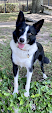
There are possibly things to do of an afternoon that are more fun than medium trot with Gryphon, but I'm sure I don't know them:
Wednesday, January 12, 2011

Pre-Boot Camp Flying Changes
Although the changes were coming along, we certainly had to cowboy through the first several attempts. Here is some footage of Delphi trying (in spite of her rider) to learn flying changes:
Sunday, January 9, 2011
Boot Camp Day 5
Delphi is doing extremely well at Belle Terre: as soon as I mounted she was much lighter in the hand and quite prepared to travel in self carriage. After viewing the photos of my riding session from today however, I need to abandon the training level riding style, shorten my reins, soften my knee, deepen my seat and channel my inner Edward Gal and be the dressage rider.
 Abandon: leaning forward hunt seat style. Improve: bring my lower legs back and sit up in correct position.
 Abandon: popping my seat up out of the saddle then driving the horse down onto the forehand. Improve: keep my elbows down with a straight line from firm wrist to bit; sitting up and reaching back actively with my seat each canter stride.
 Abandon: too long reins and lack of jump in the canter stride. Improve: shorten the reins then activate the inside hind for more jump and collection.
 Abandon: loose, floppy reins. Improve: uberstreichen is good, but I should shorten my reins so to be IMMEDIATE with both the giving of the rein and the QUICK half halt.
 Abandon: leaning forward during uberstreichen. Improve: okay to show clear give, but keep a correct position and insist the horse returns back to the rider's proper balance; the rider dictates the horse's balance, not the other way 'round.
 Abandon: too long reins that allow the horse to tighten or go inverted before the rider has time to react. Improve: shorten the reins and be ready with quick half halts as well as quick gives. Keep the reins soft but shorter and be ready with a corrective leg, seat, and half halt.
 Abandon: this is a pretty training level trot, but too bad- we're NOT in training level anymore Toto. Improve: ask for more impulsion and collection with correct leg, seat, back and "armpit muscle" aids.
 Abandon: pulling the inside rein. Improve: shorten the reins several inches and "fix" things with my leg and seat rather than my hands.
 Abandon: allowing the lower leg to creep forward. Improve: keep my knee soft and lower leg back to activate the hindquarters; shorten the reins to receive the collection created by correct aids.
Learning the art and science of dressage takes a lifetime, and one needs patience and perseverance to succeed. Having high expectations for my horse is not enough. I must shelve the excuses and insist on personal excellence to grow into the grand prix rider I dream of becoming.
Witness:
 Abandon: leaning forward hunt seat style. Improve: bring my lower legs back and sit up in correct position.
 Abandon: popping my seat up out of the saddle then driving the horse down onto the forehand. Improve: keep my elbows down with a straight line from firm wrist to bit; sitting up and reaching back actively with my seat each canter stride.
 Abandon: too long reins and lack of jump in the canter stride. Improve: shorten the reins then activate the inside hind for more jump and collection.
 Abandon: loose, floppy reins. Improve: uberstreichen is good, but I should shorten my reins so to be IMMEDIATE with both the giving of the rein and the QUICK half halt.
 Abandon: leaning forward during uberstreichen. Improve: okay to show clear give, but keep a correct position and insist the horse returns back to the rider's proper balance; the rider dictates the horse's balance, not the other way 'round.
 Abandon: too long reins that allow the horse to tighten or go inverted before the rider has time to react. Improve: shorten the reins and be ready with quick half halts as well as quick gives. Keep the reins soft but shorter and be ready with a corrective leg, seat, and half halt.
 Abandon: this is a pretty training level trot, but too bad- we're NOT in training level anymore Toto. Improve: ask for more impulsion and collection with correct leg, seat, back and "armpit muscle" aids.
 Abandon: pulling the inside rein. Improve: shorten the reins several inches and "fix" things with my leg and seat rather than my hands.
 Abandon: allowing the lower leg to creep forward. Improve: keep my knee soft and lower leg back to activate the hindquarters; shorten the reins to receive the collection created by correct aids.
Learning the art and science of dressage takes a lifetime, and one needs patience and perseverance to succeed. Having high expectations for my horse is not enough. I must shelve the excuses and insist on personal excellence to grow into the grand prix rider I dream of becoming.
Friday, January 7, 2011
Postcards from Camp
Heard from Delphi today. Lurena said she bonded so quickly with Bailey and Gentle Rain, her paddock mates, that when she worked her the first time Delphi was calling, whippping her head around to gaze at the paddock, and in general being a first class brat. Delphi was really feeling good about herself because not only did she have the run of the largest paddock, after gobbling her food (a small dry quart only) she barged Bailey out of the way and gobbled Bailey's ration too. SO, Lurena promptly segregated Delphi to a paddock where she is alone and the only thing she can do to feel good about herself is squeal at the poor gelding Casper in the next paddock over. Hopefully, rather than running Belle Terre (a job Delphi's convinced should be hers) Delphi can now focus on her real job of dressage.
Lurena has been schooling Delphi in that ever important prerequisite to all things past second level: Self Carriage.
 When she's not bossing Casper around Delphi can view the sheep of Belle Terre:

Lurena has been schooling Delphi in that ever important prerequisite to all things past second level: Self Carriage.
Casper the Friendly Horse:
 When she's not bossing Casper around Delphi can view the sheep of Belle Terre:

Boot Camp Day 4


 The lesson today on Gryphon was a breathtaking experience of *wow* medium trots, fairly good passage steps, exhilarating canter, and uphill shoulder in. By far the medium trot was the most spectacular; it was so much that the first attempt I wasn't ready and it actually took my breath away. Once I knew what to expect, I was able to sit for that amazing Trakehner extension that Gryphon does so well and for which his breed is becoming so famous.
The premium for me is allowing the horse to travel in self carriage: yes, I must half halt, but this should always be with my legs, seat and back while pushing my elbows down (think armpit muscles) but never pulling on the rein. Gryphon is quite capable and taught me how to allow a horse to travel in self carriage by giving half halts then keeping the reins soft, even "fluffy."
To improve, I should bring my lower leg back with a softer knee, allow the reins to be soft to promote self carriage, and I still could have more impulsion, forward, or just more GO in the lateral work. It was a good reminder of where I need to be to get Delphi to the next level.
Thursday, January 6, 2011
Boot Camp Day 3
Day 3 had me riding Wizard again. He's going so well that I'm considering showing him this weekend in the Blue Fox fun show.
For now, I'll leave you with this lagniappe from today's boot camp: Karen schooling her Trakehner filly Lola:
For now, I'll leave you with this lagniappe from today's boot camp: Karen schooling her Trakehner filly Lola:
Wednesday, January 5, 2011
Boot Camp Day 2
Two days in, and already I've ridden three different horses. First was Wizard, Centerline Training's Spanish barb who responded nicely to aids I've learned with Delphi. Next was Gryphon, Centerline's most accomplished Trakehner who reminded me that if I soften my knees and sit correctly, he's quite happy to move in a lovely forward and round way that is wonderful to ride.
Today I rode my barn buddy Judy's four year old Fresian who taught me that indeed even young horses respond to correct riding. To be fair, Karen Brown had just finished schooling him so he was well warmed up and on the aids. Nevertheless he was very patient with me, a stranger, and went really nicely:
Today I rode my barn buddy Judy's four year old Fresian who taught me that indeed even young horses respond to correct riding. To be fair, Karen Brown had just finished schooling him so he was well warmed up and on the aids. Nevertheless he was very patient with me, a stranger, and went really nicely:
Belle Terre Boot Camp
Day Zero:
Delphi started full training with Lurena Bell of Belle Terre Farm beginning January 3 2011. The goal for this period of intensely focused dressage schooling is for Delphi to learn, among other things, the flying changes required to get her through third level and beyond. Meanwhile, I will be supplementing my own education by riding the horses of Centerline Training and continuing lessons with both Karen Brown and Lurena.
When we pulled into the gate at Belle Terre, Delphi's buddy Bailey greeted us:
 Though Delphi will be hard at work, she will also enjoy being turned out to paddock twenty four hours daily with her friends in the picturesque setting of Belle Terre:
 I'm SO looking forward to this journey!
Friday, December 17, 2010
Lurena Bell clinic at Belle Terre Farm
Ceil's ride on PJ, a 22 year old German Riding Pony:
In canter: even when you feel good jump in the canter, also insist that he sits down. Get him to sit over his left hind leg (in left canter). Bend him in "too much" to get him to hang his neck out of his withers: make him almost over-round on each rein. The outside rein should be soft, while you ask him to bend a little left and a little right. If he speeds up, collect him back into a better balance. The canter should have a "ONE-TWO," "ONE-TWO" beat; you shouldn't hear the third beat. The half halt should make him sit down over his haunches: EXPECT him to SIT DOWN over his hindquarter. He should come all the way back to where you can soften on both reins. Think "piaffe in the canter."
In walk half pass: also sit him back so that he quits using his neck to balance; rather insist he uses his haunches to balance.
In sitting trot: don't try very hard from the waist down, and keep him soft on both reins. Slow your body down so that you only go a slow "one-two," "one-two" beat. Be sure to make everything you do about rhythm. If he gets quick, slow him way down: every step has do be deliberately placed-- no running. Rhythm creates balance, and without balance there is no rhythm.
In medium trot: try it posting trot first, then only do short stints of sitting the medium trot. Strive for balance and softness. Roll your knees in a little to steady your balance.
In canter half pass: the canter should stay the same or improve during the half pass. Left bend or right bend reminds him to develop more balance over his legs rather than his neck.
In lateral work: rhythm creates balance. When he gets tight bend him in both directions both left and right to prevent him from stiffening his neck.
Carrie's ride on Delphinia, a 12 year old Trakehner mare:
In shoulder in: keep looking into the corner. When necessary give a tap with the whip to maintain impulsion. Avoid tightness in your hip and leg. The reins need to be soft. Maintain your position regardless of what the horse is doing.
In trot: Remind the horse to be soft on both reins. It is okay to allow the horse to make a mistake. Be quick with your half halt then be fast on the give. You can increase the repetitions of the half halt then be equally quick with the give. The horse doesn't get to pick the trot; the rider decides the trot. The rider should feel "lazy" below the waist; shoulders and upper arms should allow rider to balance and allow the rider to keep the horse in balance.
In leg yield and half pass: look over to where you are going. Occasionally turn the leg yield into short stints of half pass. Test the outside rein to see if it can soften; don't allow the horse to tighten. You don't want the neck to shorten, but rather be BRIGHTER into the reins. Occasionally surprise the horse by throwing in a short diagonal line from the center line rather than leg yielding over, again allowing the horse to soften. Any half pass, leg yield etceteras is work on a diagonal line: the horse should be straight and soft despite whether the shoulders or haunches are moving. BOTH reins should have equal weight in each rein.
In canter: the rider's hips and legs have to be relaxed in canter, especially in preparing for flying changes. Sit way back- even behind the vertical. Delphi has to let the rider sit back on the pockets; facilitate this by giving quick outside half halts. If the rider's seat lightens, it is because the horse has changed the balance. Rather, the horse has to come to the RIDER's balance, not the reverse.
In canter to walk and walk to canter transitions: In the down trans from canter to walk and especially the up trans from walk to canter, the horse is NOT allowed to pull in the walk. The horse should be in the outside rein to be positioned for the transition from walk to canter. To keep the horse supple, throw in some surprise walk pirouettes during walk to canter transitions. If the horse leans on the left rein, "shake" her off of it. The heavy side can be the slow side. During the turn on the haunches, remind Delphi it's a walk: count "1-2-3-4." Half halt her back and continue the turn into a full 360 degree pirouette. Half halt on the outside rein to prevent the horse stepping out. It is okay at this point if the pirouette is big; you can always tighten it up later. If the horse pivots, then make it a bigger pirouette. Counting the horse's footfalls helps maintain the rhythm.
The rider should be able to move the rider's legs in and out, forward or backward, without the horse over-reacting to the movement of the rider's legs. The rider should set high standards, staying in position regardless of what the horse is doing and EXPECT the horse to conform to the rider's (presumably correct) balance. Even if you have to do 17 walk to canter transitions, so be it.
Monday, December 13, 2010
Straight Lines and Flexions
We schooled a wonderful exercise in our lesson this week in further preparedness for flying changes and (eventually) tempi changes: in (let's say left) canter from the short side turn down the quarter line. Ride the horse completely STRAIGHT, being sure that the horse is aligned between your aids and the haunch is neither in nor out; this exercise lives and breathes on keeping the horse ABSOLUTELY straight in canter; focus on an object on the distant horizon (a tree, fence post, whatever) to facilitate the straightness. Keeping the horse's body straight in a straight left lead canter, do flexions (NOT changes of bend per se, rather changes of flexion) left and flexions right multiple times along the quarter line maintaining the same (left) lead. At the end of the quarter line, turn left along the short side then turn left down the next quarter line and repeat. After a couple of theses straight lines Delphi is very collected, we're both organized, and the flexions are light. Once this amount of harmony is achieved, rather than turning left and coming onto the next successive quarter line, rather turn left at the end of your straight quarter line, ride along the short side wall into the next corner, then come across the long diagonal still in left canter while again maintaining the ABSOLUTE straightness (LOOK UP THE STRAIGHT LINE where you're going). At this stage in Delphi's training, before x, flex right as if you were continuing the straight line exercise, then immediately follow with the aids for flying change. Swish we got several perfect flying changes as polite as can be! You can also ask for the flying change along the quarter line, but ask before the E X B midway line so that you can keep riding straight in the new canter lead, then you must make a volte-type turn in the new direction off the quater line onto the closer wall (to the right in our example). Of course school all exercises in both directions equally. Further along in the training, one could use the same exercise to school the tempi changes along the long diagonal. This seemingly simple exercise REALLY helped me in establishing the straightness and flexions with harmony to prepare for changes that started and stayed balanced and uphill.
Subscribe to:
Posts (Atom)