From a public post written by Denny Emerson: “For the many, many, many riders who are defeatist pessimists, who torpedo their chances of becoming good riders before they even try, who equate having lots of money with riding ability, who----well, maybe you know some of these riders---
You can buy some nice OTTB for under $7,500. You can train it yourself. You can learn to sit the trot without bouncing. You can learn to have a good eye for a distance. You can read, study, practice, all the things they tell you to do that most people won't actually do--------------------
You can be that old fashioned rider who starts with one building block, one tiny level of ability. Then you add another block, Then you add another block, Then you add another block, Then you add another block---
You watch some other kids, whose parents or sponsors buy them elite horses, go flying past you, but instead of wasting fruitless energy by wailing against the fates, you keep stacking those little building blocks----
And maybe, just maybe, by having the grit to grind it out the hard way, your skills will become greater, and deeper, and more profoundly owned, than the abilities of those who took the easy street.
Or, of course, you can choose to decide how unfair it all is, and spend the same energy complaining when you could have been practicing.
I see this ALL THE TIME. I wrote a book about this topic, how the making of choices either opens or closes doors. Why squander your talent by telling yourself it's no use? Tell yourself that, yes you can---Even if you half think it's a lie. Better a positive lie than a negative lie, don't you think? Choose.” —Denny Emerson
I pretty much agree with this, with one caveat, that is: be in a good program with a trainer you trust and has who your best interest at heart. Anna Burtell once told me that most riders (adult amateurs especially) do not need Olympic level trainers, rather we just need an average trainer that we stick with and follow their program day in and day out, year in and year out, and actually DO WHAT THE TRAINER SAYS.
I’ve tested this in the actual lab of life and found it to be true, and have been lucky with three excellent trainers. Gary Moss in my college years (she was not an Olympic trainer, not even a dressage trainer but a mentor who truly had my best interest at heart and helped me so much figuring out my “formative” years in riding [and life for that matter]). With help from her advice I campaigned three OTTBs on a ghost of a budget during my college years.
Later in “grownup” life I was fortunate to find Karen Brown who taught me so much in the saddle and out, and gave me many useful tools for making agreeable horses out of sometimes not so willing partners (it is from Karen I learned how to load reluctant horses [at times downright difficult and even dangerous horses] safely and calmly into a trailer, and Karen taught me the one rein stop that has saved my neck more than once on a big, rambunctious horse). Under Karen Brown I achieved my USDF bronze medal and was able to school much of the FEI on not-expensive horses.
For these past going on seven years I’ve been grateful to work under the analytic eye of Andrea Attard. She has improved my position and ability to influence the horse through relentlessly staying on top of “position, position, position.” I’ve learned more about horse and rider safety and keeping horses sound from Andrea than I have ever done in a lifetime before being in her program, including undergrad and advanced degrees in equine science (yes, Andrea has taught me much more in seven years than any universities could possibly teach a student— not a criticism against college, just an understanding that one’s printed degree is only the beginning). Andrea excels at “riding a horse sound” and I’ve witnessed hands-on how horses in her program become more sound with increased ride-ability. Within Andrea’s program I’ve earned my USDF silver medal and have gone to regional championships each year I’ve shown with her on three horses, and qualified for national championships on two horses. We’ve achieved champion (HDS fourth level) or reserve (USDF all breeds second level) on multiple horses. One of Andrea’s specialties is purchasing the correct horse that will be a good counterpart for a specific rider, and I’ve learned valuable lessons about suitability of the match while staying within budget (a seemingly impossible task that Andrea has miraculously pulled off time and again) while purchasing two horses under her guidance.
The point is: develop a relationship with a good trainer, stick with their program and do what the trainer tells you, practice, practice, practice (as Denny says above), and I’m living proof that even “just about anyone” can achieve success!
Thursday, February 13, 2020
Wednesday, February 12, 2020
Lyndon Rife clinic February 9-10 2020
To address rideability, keep the horse in shoulder in position while being able to counter flex in the opposite direction of the bend. An example exercise: ride right lead canter on the rail staying in shoulder in right position, half pass right onto the inside track then counter flex him left at the poll, then back to right flexion, all while staying in right shoulder in positioning. Also you can check in on this on a circle, while circling right maintain right bend and see if you can counter flex left while keeping the right bend and right shoulder in positioning, so turning right but flexion left, then back to turning right and flexion right.
An exercise to school flying changes: canter up the long side (let's say in right lead canter); from the corner half pass right toward the quarterline, then turn it in to leg yield with a slight flexion left to the centerline, then straight on the centerline with a straight flying change on the centerline then track left. With Jazzy, ride his outside hind by vibrating your outside leg back and keep your inside leg almost off of him while really riding his outside in the canter.
An exercise to school pirouettes: start on straight lines in canter, then half pass in toward the centerline, after a couple lines of half passing in, come onto a circle at the end of the arena and then as you bring the circle in add a feel of half pass while continuing to bring the shoulders around the circle and then canter back out on the circle, then bring the circle in with half pass around the circle again and then back out onto the larger circle.
When half passing, have a feel of shoulder in to begin, then start the half pass with your weight aid so that Jazzy is not just falling into your inside leg but that you have the correct alignment to begin. Positon Jazzy so that your outside knee is pointing toward the letter to which you are riding.
In the medium (and extended) trot, think of first creating taller, rounder steps with Jazzy's knees stepping higher and rounder so that his shoulders stay up in front (rather than his shoulder getting a bit flat). Then when you turn onto the diagonal line, be sure to maintain straightness (Jazzy can fall into your right leg so even think about the feel of leg yielding him away from your right leg). Then put your lower leg on and grow the strides longer but keeping him higher and rounder, bringing the hindlegs with you. Be sure to look up and ride from letter to letter on the long diagonal.
An exercise to school flying changes: canter up the long side (let's say in right lead canter); from the corner half pass right toward the quarterline, then turn it in to leg yield with a slight flexion left to the centerline, then straight on the centerline with a straight flying change on the centerline then track left. With Jazzy, ride his outside hind by vibrating your outside leg back and keep your inside leg almost off of him while really riding his outside in the canter.
An exercise to school pirouettes: start on straight lines in canter, then half pass in toward the centerline, after a couple lines of half passing in, come onto a circle at the end of the arena and then as you bring the circle in add a feel of half pass while continuing to bring the shoulders around the circle and then canter back out on the circle, then bring the circle in with half pass around the circle again and then back out onto the larger circle.
When half passing, have a feel of shoulder in to begin, then start the half pass with your weight aid so that Jazzy is not just falling into your inside leg but that you have the correct alignment to begin. Positon Jazzy so that your outside knee is pointing toward the letter to which you are riding.
In the medium (and extended) trot, think of first creating taller, rounder steps with Jazzy's knees stepping higher and rounder so that his shoulders stay up in front (rather than his shoulder getting a bit flat). Then when you turn onto the diagonal line, be sure to maintain straightness (Jazzy can fall into your right leg so even think about the feel of leg yielding him away from your right leg). Then put your lower leg on and grow the strides longer but keeping him higher and rounder, bringing the hindlegs with you. Be sure to look up and ride from letter to letter on the long diagonal.
Monday, November 25, 2019
Gratuitous Dog Photos
Because, why not?
We love living in the city, and Buffalo Bayou Park is the best dog-friendly urban wilderness for roaming, sniffing, and seeing the sights. Home of the Wortham fountain, the Waugh bat colony, the canoe trail and more. Rosco's favorite is eating breakfast sandwiches on the patio at The Dunlavy.
There's always someone interesting in the park, and today we met Alisa, who loves saying hi to the pups. Alisa writes the naturalist blog for the Buffalo Bayou Park, an awesome blog about a variety of naturalist topics, not least of which is the multitude of animals in the park. Among other animals, Alisa said she loves Border collies and especially Corgis!
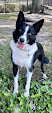
We love living in the city, and Buffalo Bayou Park is the best dog-friendly urban wilderness for roaming, sniffing, and seeing the sights. Home of the Wortham fountain, the Waugh bat colony, the canoe trail and more. Rosco's favorite is eating breakfast sandwiches on the patio at The Dunlavy.
Here is downtown Houston from our street with Rosco the Cocker spaniel and Gunner the Border collie. Gunner is an AKC Canine Good Citizen and holds an AKC Trick Dog Novice title as well. Rosco, at twelve years old, is ruler of all he surveys.
There's always someone interesting in the park, and today we met Alisa, who loves saying hi to the pups. Alisa writes the naturalist blog for the Buffalo Bayou Park, an awesome blog about a variety of naturalist topics, not least of which is the multitude of animals in the park. Among other animals, Alisa said she loves Border collies and especially Corgis!
Thursday, November 14, 2019
Some principles to remember
Upon reflection of Jazzy's and my ongoing dressage training this past year, the following principles continued to emerge from our training with Andrea Attard, Conrad Schumacher, and Lyndon Rife, and are worth reviewing:
This is how to increase reliability: if the horse does something you don't like, just keep going, riding correctly, and make an improvement a little later in motion. Always ride with the outside leg, so that the connexion will be correct. Use the rider's outside leg to hold the horse round in the connexion; have the outside leg in a guarding position. It is very important that when you are riding the inside leg to the outside rein, you are also riding the outside leg which is guarding, as well as you can say a guarding outside rein. The principle is you bring the horse to the outside, not that you're holding the outside tight, rather bring the horse to the outside rein in a soft way. And when you have brought the horse to the outside, then the neck gets stable and gets soft and stays round.
Be very fussy about riding very accurate geometry, such as in circles. Understand the arena and know exactly where each size circle should be ridden according to the letters and your position in the arena.
Timing is everything. Strong position is everything. Correct contact and connexion is everything.
If you get a not-perfect walk to canter transition, freshen the canter and make it better first, then go back and improve the walk to canter transition. Otherwise if you immediately go back to walk, the horse learns that he was still a bit slow to the leg in the transition; instead make the canter better first, then go back to the transition.
The idea of training movements for a particular level is not worth much without the overarching idea of developing the horse correctly right now and to build on for the future. The idea of developing the horse by teaching him to carry and be in self-carriage is of utmost importance. Always examine and challenge the straightness, the bending, the connexion, and the lightness of the aids. In a moment of crisis, first establish that the horse is carrying itself (you are not holding it up nor pulling it down on the forehand with the reins), then establish that the horse is in alignment (the horse is not falling over the outside shoulder with neck in, but rather the horse is established into a good outside rein connexion and the rider's inside [and outside] leg is being used to keep the ribcage out in correct bend), and then make the contact good by suppling the horse within this already established correct balance and alignment. Developing the horse for the future by teaching it to move correctly in the way of a dressage horse is the most difficult thing, but the most important thing.
It's been a good year for learning, and I'm grateful to all my teachers including this four-legged one:
Monday, November 11, 2019
Lyndon Rife Clinic October 26-27, 2019
Improving rideability was the theme that developed over the weekend. Remember to keep your hands more side by side, and keep the horse "on your outside elbow" with your wrist closing your hand on the outside rein, and you can lift your inside hand to flex him them your hands are side by side again. An exercise to help steady your hands is to bridge the reins, keeping your hands side by side and quiet, and occasionally the inside hand up the crest.
Before asking for the alignment in lateral exercises, be sure that the horse is good in the ribcage first by riding him straight, then getting the inside flexion while he is still straight and then adding the alignment last, keeping his shoulder from falling in and keeping his ribcage in a good position from your inside leg. Be able to separate it, that you can get flexion without aligning him right away, which makes him better in the ribcage. For Jazzy, ride him less low, with his ears up at the end of his long neck. It is more important to get the flexion without him getting low in the neck. Sometimes you can ride him rounder, deeper as an exercise but I need to work on the lateral suppleness so he doesn't think everything to do with the bit has to do with only being deeper. As he warms up, Jazzy gets cruising so use that to keep him more uphill, otherwise he'll be really forward but still a little on the forehand, so be sure that all the time you're working to get him off the forehand more and more. One way of doing this is to stay taller in your position, squeeze the outside rein and make him wait on you a bit.
If you get a not-perfect walk to canter transition, freshen the canter and make it better first, then go back and improve the walk to canter transition. For canter to walk, step down into a deep inside leg, freshen the canter, then make the canter shorter, shorter, shorter, walk. For walk to canter: keep your inside leg deep, take it off a couple times and bump bump down a little to wake him up, squeeze on the outside rein and keep the outside rein in the transition, take your outside leg off, bring it back and then ask for the canter with your inside heel down (bring your outside leg back without it being on him and then your inside leg). If you slide your outside leg back, then you push the haunches in. Remember he has to be prompt and pay attention to your leg.
An exercise to improve rideability for the canter: ride half pass toward the centerline and then change the flexion, stay cantering on the same line then change the flexion back to the true lead then turn in that direction without doing a change. So half pass from the longside toward the centerline, keeping his shoulders on the line, then counter flex him but keep his shoulders in the same positioning then flex him back to the true canter lead flexion then track in the direction of the canter lead. So you can play around with the flexion without doing the change. So that you can control the shoulders and that you can flex him without him thinking about doing the change. It helps to half pass directly out of the corner because you can really bend him and put his haunches to the inside and make the point that his ears and his shoulders lead slightly because you already have control of the haunches. On the short side, get the haunches more to the inside so that you know they'll be available when you start the half pass. You need to be able to keep the haunches caught up (for Jazzy, especially the right huanches when cantering on the left lead). If he gets too strong and won't let you half pass, walk and do the half pass at the walk, almost halting and really bringing the haunches with the half pass, then canter and do the half pass in canter. Remember to keep the outside rein, outside leg control, keeping him on your outside elbow.
Note: when you counter-flex him (let's say to the right while cantering on the left lead) don't turn him right, he has to keep turning left and you flex him right, using both reins. The new outside rein (the counterflexion rein) yields him over and the left rein keeps him and is supported by your deep, weighted inside leg keeping him really cantering on the left lead. When cantering on the right lead, keep his shoulders right but be able to flex him left. Keep him in shoulder fore right, and your left rein can flex him left but the right rein has to lead him right. Looking left, but turning right, even on a straight line. On a circle, the line in the middle of his chest stays on the circle, and you can flex his poll right or left your choice, but his shoulders and chest stay turning on the circle in shoulder fore.
Before asking for the alignment in lateral exercises, be sure that the horse is good in the ribcage first by riding him straight, then getting the inside flexion while he is still straight and then adding the alignment last, keeping his shoulder from falling in and keeping his ribcage in a good position from your inside leg. Be able to separate it, that you can get flexion without aligning him right away, which makes him better in the ribcage. For Jazzy, ride him less low, with his ears up at the end of his long neck. It is more important to get the flexion without him getting low in the neck. Sometimes you can ride him rounder, deeper as an exercise but I need to work on the lateral suppleness so he doesn't think everything to do with the bit has to do with only being deeper. As he warms up, Jazzy gets cruising so use that to keep him more uphill, otherwise he'll be really forward but still a little on the forehand, so be sure that all the time you're working to get him off the forehand more and more. One way of doing this is to stay taller in your position, squeeze the outside rein and make him wait on you a bit.
If you get a not-perfect walk to canter transition, freshen the canter and make it better first, then go back and improve the walk to canter transition. For canter to walk, step down into a deep inside leg, freshen the canter, then make the canter shorter, shorter, shorter, walk. For walk to canter: keep your inside leg deep, take it off a couple times and bump bump down a little to wake him up, squeeze on the outside rein and keep the outside rein in the transition, take your outside leg off, bring it back and then ask for the canter with your inside heel down (bring your outside leg back without it being on him and then your inside leg). If you slide your outside leg back, then you push the haunches in. Remember he has to be prompt and pay attention to your leg.
An exercise to improve rideability for the canter: ride half pass toward the centerline and then change the flexion, stay cantering on the same line then change the flexion back to the true lead then turn in that direction without doing a change. So half pass from the longside toward the centerline, keeping his shoulders on the line, then counter flex him but keep his shoulders in the same positioning then flex him back to the true canter lead flexion then track in the direction of the canter lead. So you can play around with the flexion without doing the change. So that you can control the shoulders and that you can flex him without him thinking about doing the change. It helps to half pass directly out of the corner because you can really bend him and put his haunches to the inside and make the point that his ears and his shoulders lead slightly because you already have control of the haunches. On the short side, get the haunches more to the inside so that you know they'll be available when you start the half pass. You need to be able to keep the haunches caught up (for Jazzy, especially the right huanches when cantering on the left lead). If he gets too strong and won't let you half pass, walk and do the half pass at the walk, almost halting and really bringing the haunches with the half pass, then canter and do the half pass in canter. Remember to keep the outside rein, outside leg control, keeping him on your outside elbow.
Note: when you counter-flex him (let's say to the right while cantering on the left lead) don't turn him right, he has to keep turning left and you flex him right, using both reins. The new outside rein (the counterflexion rein) yields him over and the left rein keeps him and is supported by your deep, weighted inside leg keeping him really cantering on the left lead. When cantering on the right lead, keep his shoulders right but be able to flex him left. Keep him in shoulder fore right, and your left rein can flex him left but the right rein has to lead him right. Looking left, but turning right, even on a straight line. On a circle, the line in the middle of his chest stays on the circle, and you can flex his poll right or left your choice, but his shoulders and chest stay turning on the circle in shoulder fore.
Conrad Schumacher Clinic September 20, 2019
When schooling the halt, do not correct the halt if the horse fidgets or is a bit tense; don't move just be quiet. Rather wait for the halt to settle, even if for just one beat, then walk on again. For Jazzy, Conrad suggested it is okay to ride him a bit shorter in the neck even during the warm up phase. To encourage relaxation, school several halt, walk, halt transitions, waiting for Jazzy to settle in the halt. After you start the trot, do trot, walk, halt transitions with your seat wide and heels down, and do walk, trot transitions from the halt.
A warm up excercise in trot is to ride a three loop serpentine, making a ten meter circle each time you come to the wall. After the serpentine, go down centerline and make a ten meter circle figure of eight left then right near G (or D), coming to a halt again at the end on the centerline. When bending be sure to keep your inside leg down and carry your inside hand a little higher to ensure that the horse keeps the flexion. As necessary walk on and halt again, remembering not to correct anything, rather allow him to settle in the halt then walk on again. To reward him, soften your shoulders (rather than petting him).
When cantering a twenty meter circle, keep him in shoulder fore on the circle. In the walk to canter transition, follow the horse's motion with your hips. To get a purchase on the outside hind you can think baby travers (haunches in). Conrad commented on the good quality of Jazzy's canter, saying it is a very pretty canter.
Ten meter circles in canter are an exercise to improve bend. If you have a not so perfect walk to canter transition, do not imeediately go back to walk to do it again, rather stay in canter and make the canter better again before going back to the walk and reschooling the walk to canter.
Another canter exercise is to ride a ten meter circle right from the centerline near L (or I), then go on the diagonal and stay in right counter canter through the short side, then do another ten meter circle right near I (or L), then again make a counter canter half twenty metre circle through the short side. Then ride the diagonal back to true right canter followed by a walk transition.
When schooling medium trot on a twenty meter circle left, be sure to guard the outside (right) hindleg. Conrad commented on how beautiful Jazzy's medium trot was. At this point in the ride, Jazzy was allowed to stretch onto a twenty meter circle in trot, holding the rhythm while staying in self carriage.
This is how to increase reliability: if the horse does something you don't like, just keep going, riding correctly, and make an improvement a little later in motion. Always ride with the outside leg, so that the connexion will be correct. Use the rider's outside leg to hold the horse round in the connexion; have the outside leg in a guarding position. It is very important that when you are riding the inside leg to the outside rein, you are also riding the outside leg which is guarding, as well as you can say a guarding outside rein. The principle is you bring the horse to the outside, not that you're holding the outside tight, rather bring the horse to the outside rein in a soft way. And when you have brought the horse to the outside, then the neck gets stable and gets soft and stays round.
While test riding: In the renvers, allow the outside shoulder to allow the bend. In the extended walk, the rider should remember to move the hips with the motion of the horse, and keep the contact so that the neck does not get too long; a slightly shorter neck will help you later in the next transition. Allow in the right rein in the counter canter.
To improve the walk, ride the walk through the neck. Do not be stiff, rather follow the horse with your hips. When the walk to canter transitions improve, the walk will improve with it.
Jazzy having a chat with Conrad:
Monday, October 7, 2019
2019 USDF Region 9 GAIG Championships
Ultra Jazzy once again held his own in excellent company at the USDF Region 9 GAIG Championships, where he was GAIG second level championship fourth and GAIG first level championship tenth with scores to 68.3 and qualified for USDF National Championships in Kentucky at second level. I am especially grateful to Jazzy's dad Chris for supporting my dream and always being our biggest champion. Also extremely grateful to our trainer and coach Andrea Attard who is with us day in and day out, in the trenches, through the bad and the good. We have had so much support too from excellent clinicians including Lyndon Rife. So many people have come forward to express good wishes; our braider Bree and my friend Ceil who works every show in the scoring office or the announcer's booth have volunteered to come with us to Kentucky to groom, and we've already had friends extending help with travel logistics. I feel so much appreciation for everyone around us both at home and the barn, all Jazzy's veterinary, farrier, grooming and additional support people. If it takes a village then Jazzy and I live in a metropolis.
Sporting some favorite pieces of jewelry, my USDF medals (thank you Rijkens!) lapel pins:
Monday, September 9, 2019
Leg Aid Position
When riding lateral movements such as renvers, the rider's leg position should be very obvious so that the horse can bend around a deep inside leg at the girth (this is the horse's center of gravity) and the rider's outside leg back to create the bend, supported with the connected outside rein and keeping the inside flexion with the carried inside rein. For now especially, I need to focus on keeping my inside leg at the girth with a long leg and deep heel, and my outside leg behind the girth ready to give a good aid to keep bend and angle on a four track renvers. The inside leg almost feels like it is forward in front of the girth; that is the feeling I need for now until it becomes automatic for my inside leg being at the girth with a long leg and deep heel. Always riding from one half halt to the next, keeping a strong position and keeping the horse tall in self carriage.
Wednesday, August 28, 2019
Strategy Continues
When schooling during warm up, be very fussy about riding very accurate geometry in 20 meter circles, 15 meter, 10 meter, etc. Study the arena diagram and know exactly where each size should be ridden according to the posted letters and where you are in the arena.
In transitions, bend Jazzy between both legs with the outside leg back to bring the haunches and the inside leg forward at the girth, dynamic (not holding constantly but rather deep, elastic and available to give a good aid). Carry the inside rein even a bit wide in the warm up to avoid crossing your hand over the neck, and to encourage Jazzy to bend and swing through his body. At this point push the tail out on the circle and have your outside leg back to keep the bend and the outside hind leg active. Keep the horse bending-turning-flexing while doing multiple, prompt transitions walk-trot-walk-trot, keeping Jazzy's inside hind leg active and stepping under, and maintaining a loose but dynamic inside leg with outside leg back to keep the outside hind leg active as well, and heels down, toes up, deep inside leg and strong position in all transitions.
A helpful exercise to school both bending and simple changes: starting in right lead canter, canter down the long side from R to F and make a half 10 meter circle turn down centerline at A, collecting the canter (you can eventually even use this to school large schooling pirouettes); canter a diagonal line toward B, making a transition to walk before you reach the long side while still on the diagonal line. Continue in collected walk to B, then make a transition to collected canter left lead on the long side. Repeat by cantering B to M and make a ten meter half circle turn down centerline from C and canter a diagonal line back to B, collecting the canter as you go; make a transition to collected walk while still on the diagonal line. Making the transition to walk going toward the long side wall helps by using the wall to back the horse off a bit.
Riding the ten meter half circle on the short side between M and C (or between F and A) is your opportunity to really bend the horse well between the outside and inside bending aids. Timing is important: in the upward transition from collected walk into collected canter you must keep the outside rein to maintain collection while first (at the walk) establishing flexion with the inside rein but softening the inside rein to keep the nose up and out in the transition into canter itself. Strong position is important, loose legs, deep heels (toes up), and correct positioning of deep inside leg and outside leg back, while maintaining a deep seat and shoulder blades back and together, and keep the outside rein to keep the collection. In the transition from collected canter to walk, Jazzy must be very supple in the contact and light in the hand so he can land softly into a forward walk; to do this I must have him up and out in a forward carried hand and I must bring the hind legs with me into the transition to walk. Timing is everything. Strong position is everything. Correct contact and connexion is everything.
In transitions, bend Jazzy between both legs with the outside leg back to bring the haunches and the inside leg forward at the girth, dynamic (not holding constantly but rather deep, elastic and available to give a good aid). Carry the inside rein even a bit wide in the warm up to avoid crossing your hand over the neck, and to encourage Jazzy to bend and swing through his body. At this point push the tail out on the circle and have your outside leg back to keep the bend and the outside hind leg active. Keep the horse bending-turning-flexing while doing multiple, prompt transitions walk-trot-walk-trot, keeping Jazzy's inside hind leg active and stepping under, and maintaining a loose but dynamic inside leg with outside leg back to keep the outside hind leg active as well, and heels down, toes up, deep inside leg and strong position in all transitions.
A helpful exercise to school both bending and simple changes: starting in right lead canter, canter down the long side from R to F and make a half 10 meter circle turn down centerline at A, collecting the canter (you can eventually even use this to school large schooling pirouettes); canter a diagonal line toward B, making a transition to walk before you reach the long side while still on the diagonal line. Continue in collected walk to B, then make a transition to collected canter left lead on the long side. Repeat by cantering B to M and make a ten meter half circle turn down centerline from C and canter a diagonal line back to B, collecting the canter as you go; make a transition to collected walk while still on the diagonal line. Making the transition to walk going toward the long side wall helps by using the wall to back the horse off a bit.
Riding the ten meter half circle on the short side between M and C (or between F and A) is your opportunity to really bend the horse well between the outside and inside bending aids. Timing is important: in the upward transition from collected walk into collected canter you must keep the outside rein to maintain collection while first (at the walk) establishing flexion with the inside rein but softening the inside rein to keep the nose up and out in the transition into canter itself. Strong position is important, loose legs, deep heels (toes up), and correct positioning of deep inside leg and outside leg back, while maintaining a deep seat and shoulder blades back and together, and keep the outside rein to keep the collection. In the transition from collected canter to walk, Jazzy must be very supple in the contact and light in the hand so he can land softly into a forward walk; to do this I must have him up and out in a forward carried hand and I must bring the hind legs with me into the transition to walk. Timing is everything. Strong position is everything. Correct contact and connexion is everything.
Tuesday, August 27, 2019
Show Strategy
Jazzy and I had a good show this weekend at the HDS Laborious Day Show. My trainer and I talked about improving our show strategy. Of course doing well at shows is NOT why we ride and train and work hard, we do dressage for the improvement of our horses, to make them increasingly beautiful and sound, and to improve ourselves in the journey as noble equestrians. However, it seems reasonable to have an element of test riding skill if one continues the not inconsequential effort and expense of going to horse shows.
With that in mind, and as USDF Region 9 championships are a few short weeks away, I did an analysis of all Jazzy's second level test three scores and individual marks from this year by building an excel spreadsheet. Here are some of the trends that emerged:
Test movements I need to improve most (in order of urgency):
Travers left,
Transitions to and from medium canter left lead,
Simple change right to left (double coefficient),
Travers right,
Medium canter left lead,
Walk pirouette left (double coefficient),
10m trot circle right, and
Transitions to and from medium trot left to right rein (double coefficient).
The other double coefficient movements are worth improving too, they are (in order of average score lower to higher):
Transitions to and from medium trot right to left rein,
Simple change left to right,
Halt-rein back,
Walk pirouette right, and
Free walk.
Interestingly, the walk pirouette right scores higher than the walk pirouette left. The simple change left to right scores a bit higher versus the simple change right to left.
Jazzy's top four highest scoring movements: 1) Centerline halt and salute at end and beginning, 2) transitions from canter to trot near the end of the test, 3) shoulder in left, and 4) free walk.
With that in mind, and as USDF Region 9 championships are a few short weeks away, I did an analysis of all Jazzy's second level test three scores and individual marks from this year by building an excel spreadsheet. Here are some of the trends that emerged:
Test movements I need to improve most (in order of urgency):
Travers left,
Transitions to and from medium canter left lead,
Simple change right to left (double coefficient),
Travers right,
Medium canter left lead,
Walk pirouette left (double coefficient),
10m trot circle right, and
Transitions to and from medium trot left to right rein (double coefficient).
The other double coefficient movements are worth improving too, they are (in order of average score lower to higher):
Transitions to and from medium trot right to left rein,
Simple change left to right,
Halt-rein back,
Walk pirouette right, and
Free walk.
Interestingly, the walk pirouette right scores higher than the walk pirouette left. The simple change left to right scores a bit higher versus the simple change right to left.
Jazzy's top four highest scoring movements: 1) Centerline halt and salute at end and beginning, 2) transitions from canter to trot near the end of the test, 3) shoulder in left, and 4) free walk.
Subscribe to:
Posts (Atom)


