Lurena's lesson today was a real epiphany. Delphi is blossoming at Belle Terre; Lurena believes Delphi has superior gaits than what Delphi has shown heretofore. It's my responsibility to ride to a level of excellence.
To improve the walk, insist that it is light, balanced, but briskly marching. If it's not, do something (anything) sideways such as leg yield or shoulder in. Delphi traditionally responds by slowing or "sticking" in the lateral work at walk so I reinforce the marching walk with a kick or whip tap. Once she is "opened" and marching in the sideways walk work, I allow her to travel straight in the better walk.
To improve the trot we worked on softening the reins with quick (and they can be quite firm) half halts and quick gives. If Delphi attempts to dive down, or run, or alter the balance so the trot gets uncomfortable to sit, I must remain in my own correct balance and dictate the balance in which I want her to stay. It's up to the rider to maintain the correct balance, even when the horse makes a mistake or tries to evade.
To improve the canter, also soften the reins with quick half halts up and quick gives. Lots of counter flexions and true flexions create throughness. Especially in canter, if Delphi dives down, breaks to trot, changes lead or otherwise makes a mistake, I must keep my position up and back with my seat flat on the saddle (don't tilt forward). Partiuclarly when a mistake occurs, I keep my upright balanced position and say "Fine, make a mistake, but it better be balanced and it better be light." Of course it's fine to make a correction, but insist the horse is balanced and remains light throughout.
A trap I've fallen into when Delphi breaks, or runs, or swaps lead in counter canter or whatever, is that I stop the exercise to re-group (or at best lean forward to keep her going) but thereby give her a break or assist her by adjusting to the balance she has dictated. Instead I should just say "Too bad" and maintain my up and back position, giving the upward half halts and keeping her balanced and engaged through the exercise's completion. Of course Delphi thinks this is way too much work and has been complaining about it to Lurena, but with the new expectations placed on her Delphi is becoming more attentive (her ears stayed back in a pleasant, floppy way on me during most of the ride rather than pricked forward spoiling for something else to do) and indeed more capable of showing better gaits and maneuvers.
Wednesday, January 19, 2011

Monday, January 17, 2011
Boot Camp Day 11
During my schooling ride on Gryphon today we were able to test some theory from a George Williams clinic my barn buddy Ceil shared. The theory states one must first have latitudinal flexion created in part by the inside rein, and only then can one get longitudinal flexion with help from the outside rein. Gryphon was quite willing to demonstrate this: once soft on the inside rein (latitudinally), I was then able to get him quite soft longitudinally on the outside rein. Then the cycle would repeat and Gryphon was traveling lightly and in self carriage with me cycling through the latitudinal then longitudinal aids with NO mauling or dwelling on the reins. Basic yes but it really helped me as a rider to be aware of how the rein aids (supplemented of course by all the other aids: leg, seat, etceteras) were coming through.
The aid for canter is very subtle with Gryphon. It is similar to the aids for shoulder in, but the rider must remain straight and balanced, turn the rider's frontal plane slightly to the outside with an ever so slight nudge onto the rider's inside seat bone. Gryphon happily canters off in collection from this very subtle aid but the rider must first prepare by having him through the aids, light in front, and organized for the transition.
Once in canter, I again was able to prove the George Williams theory that the horse must stay in front of the leg. Test this by leg yielding away from the rider's inside leg: if the horse is not very willing to do so then he is no longer in front of the rider's leg. Gryphon was indeed willing to yield obediently away from my inside leg. And of course the latitudinal and longitudinal circuit testing was ongoing for canter as well. Voila: another satisfying instance of the lecture being proved in the lab.
The aid for canter is very subtle with Gryphon. It is similar to the aids for shoulder in, but the rider must remain straight and balanced, turn the rider's frontal plane slightly to the outside with an ever so slight nudge onto the rider's inside seat bone. Gryphon happily canters off in collection from this very subtle aid but the rider must first prepare by having him through the aids, light in front, and organized for the transition.
Once in canter, I again was able to prove the George Williams theory that the horse must stay in front of the leg. Test this by leg yielding away from the rider's inside leg: if the horse is not very willing to do so then he is no longer in front of the rider's leg. Gryphon was indeed willing to yield obediently away from my inside leg. And of course the latitudinal and longitudinal circuit testing was ongoing for canter as well. Voila: another satisfying instance of the lecture being proved in the lab.
Wednesday, January 12, 2011
Hurtling Through Space
There are possibly things to do of an afternoon that are more fun than medium trot with Gryphon, but I'm sure I don't know them:
Pre-Boot Camp Flying Changes
Although the changes were coming along, we certainly had to cowboy through the first several attempts. Here is some footage of Delphi trying (in spite of her rider) to learn flying changes:
Sunday, January 9, 2011
Boot Camp Day 5
Delphi is doing extremely well at Belle Terre: as soon as I mounted she was much lighter in the hand and quite prepared to travel in self carriage. After viewing the photos of my riding session from today however, I need to abandon the training level riding style, shorten my reins, soften my knee, deepen my seat and channel my inner Edward Gal and be the dressage rider.
 Abandon: leaning forward hunt seat style. Improve: bring my lower legs back and sit up in correct position.
 Abandon: popping my seat up out of the saddle then driving the horse down onto the forehand. Improve: keep my elbows down with a straight line from firm wrist to bit; sitting up and reaching back actively with my seat each canter stride.
 Abandon: too long reins and lack of jump in the canter stride. Improve: shorten the reins then activate the inside hind for more jump and collection.
 Abandon: loose, floppy reins. Improve: uberstreichen is good, but I should shorten my reins so to be IMMEDIATE with both the giving of the rein and the QUICK half halt.
 Abandon: leaning forward during uberstreichen. Improve: okay to show clear give, but keep a correct position and insist the horse returns back to the rider's proper balance; the rider dictates the horse's balance, not the other way 'round.
 Abandon: too long reins that allow the horse to tighten or go inverted before the rider has time to react. Improve: shorten the reins and be ready with quick half halts as well as quick gives. Keep the reins soft but shorter and be ready with a corrective leg, seat, and half halt.
 Abandon: this is a pretty training level trot, but too bad- we're NOT in training level anymore Toto. Improve: ask for more impulsion and collection with correct leg, seat, back and "armpit muscle" aids.
 Abandon: pulling the inside rein. Improve: shorten the reins several inches and "fix" things with my leg and seat rather than my hands.
 Abandon: allowing the lower leg to creep forward. Improve: keep my knee soft and lower leg back to activate the hindquarters; shorten the reins to receive the collection created by correct aids.
Learning the art and science of dressage takes a lifetime, and one needs patience and perseverance to succeed. Having high expectations for my horse is not enough. I must shelve the excuses and insist on personal excellence to grow into the grand prix rider I dream of becoming.
Witness:
 Abandon: leaning forward hunt seat style. Improve: bring my lower legs back and sit up in correct position.
 Abandon: popping my seat up out of the saddle then driving the horse down onto the forehand. Improve: keep my elbows down with a straight line from firm wrist to bit; sitting up and reaching back actively with my seat each canter stride.
 Abandon: too long reins and lack of jump in the canter stride. Improve: shorten the reins then activate the inside hind for more jump and collection.
 Abandon: loose, floppy reins. Improve: uberstreichen is good, but I should shorten my reins so to be IMMEDIATE with both the giving of the rein and the QUICK half halt.
 Abandon: leaning forward during uberstreichen. Improve: okay to show clear give, but keep a correct position and insist the horse returns back to the rider's proper balance; the rider dictates the horse's balance, not the other way 'round.
 Abandon: too long reins that allow the horse to tighten or go inverted before the rider has time to react. Improve: shorten the reins and be ready with quick half halts as well as quick gives. Keep the reins soft but shorter and be ready with a corrective leg, seat, and half halt.
 Abandon: this is a pretty training level trot, but too bad- we're NOT in training level anymore Toto. Improve: ask for more impulsion and collection with correct leg, seat, back and "armpit muscle" aids.
 Abandon: pulling the inside rein. Improve: shorten the reins several inches and "fix" things with my leg and seat rather than my hands.
 Abandon: allowing the lower leg to creep forward. Improve: keep my knee soft and lower leg back to activate the hindquarters; shorten the reins to receive the collection created by correct aids.
Learning the art and science of dressage takes a lifetime, and one needs patience and perseverance to succeed. Having high expectations for my horse is not enough. I must shelve the excuses and insist on personal excellence to grow into the grand prix rider I dream of becoming.
Friday, January 7, 2011
Postcards from Camp
Heard from Delphi today. Lurena said she bonded so quickly with Bailey and Gentle Rain, her paddock mates, that when she worked her the first time Delphi was calling, whippping her head around to gaze at the paddock, and in general being a first class brat. Delphi was really feeling good about herself because not only did she have the run of the largest paddock, after gobbling her food (a small dry quart only) she barged Bailey out of the way and gobbled Bailey's ration too. SO, Lurena promptly segregated Delphi to a paddock where she is alone and the only thing she can do to feel good about herself is squeal at the poor gelding Casper in the next paddock over. Hopefully, rather than running Belle Terre (a job Delphi's convinced should be hers) Delphi can now focus on her real job of dressage.
Lurena has been schooling Delphi in that ever important prerequisite to all things past second level: Self Carriage.
 When she's not bossing Casper around Delphi can view the sheep of Belle Terre:

Lurena has been schooling Delphi in that ever important prerequisite to all things past second level: Self Carriage.
Casper the Friendly Horse:
 When she's not bossing Casper around Delphi can view the sheep of Belle Terre:
Boot Camp Day 4


 The lesson today on Gryphon was a breathtaking experience of *wow* medium trots, fairly good passage steps, exhilarating canter, and uphill shoulder in. By far the medium trot was the most spectacular; it was so much that the first attempt I wasn't ready and it actually took my breath away. Once I knew what to expect, I was able to sit for that amazing Trakehner extension that Gryphon does so well and for which his breed is becoming so famous.
The premium for me is allowing the horse to travel in self carriage: yes, I must half halt, but this should always be with my legs, seat and back while pushing my elbows down (think armpit muscles) but never pulling on the rein. Gryphon is quite capable and taught me how to allow a horse to travel in self carriage by giving half halts then keeping the reins soft, even "fluffy."
To improve, I should bring my lower leg back with a softer knee, allow the reins to be soft to promote self carriage, and I still could have more impulsion, forward, or just more GO in the lateral work. It was a good reminder of where I need to be to get Delphi to the next level.
Thursday, January 6, 2011
Boot Camp Day 3
Day 3 had me riding Wizard again. He's going so well that I'm considering showing him this weekend in the Blue Fox fun show.
For now, I'll leave you with this lagniappe from today's boot camp: Karen schooling her Trakehner filly Lola:
For now, I'll leave you with this lagniappe from today's boot camp: Karen schooling her Trakehner filly Lola:
Wednesday, January 5, 2011
Boot Camp Day 2
Two days in, and already I've ridden three different horses. First was Wizard, Centerline Training's Spanish barb who responded nicely to aids I've learned with Delphi. Next was Gryphon, Centerline's most accomplished Trakehner who reminded me that if I soften my knees and sit correctly, he's quite happy to move in a lovely forward and round way that is wonderful to ride.
Today I rode my barn buddy Judy's four year old Fresian who taught me that indeed even young horses respond to correct riding. To be fair, Karen Brown had just finished schooling him so he was well warmed up and on the aids. Nevertheless he was very patient with me, a stranger, and went really nicely:
Today I rode my barn buddy Judy's four year old Fresian who taught me that indeed even young horses respond to correct riding. To be fair, Karen Brown had just finished schooling him so he was well warmed up and on the aids. Nevertheless he was very patient with me, a stranger, and went really nicely:
Belle Terre Boot Camp
Day Zero:
Delphi started full training with Lurena Bell of Belle Terre Farm beginning January 3 2011. The goal for this period of intensely focused dressage schooling is for Delphi to learn, among other things, the flying changes required to get her through third level and beyond. Meanwhile, I will be supplementing my own education by riding the horses of Centerline Training and continuing lessons with both Karen Brown and Lurena.
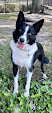
When we pulled into the gate at Belle Terre, Delphi's buddy Bailey greeted us:
 Though Delphi will be hard at work, she will also enjoy being turned out to paddock twenty four hours daily with her friends in the picturesque setting of Belle Terre:
 I'm SO looking forward to this journey!
Delphi started full training with Lurena Bell of Belle Terre Farm beginning January 3 2011. The goal for this period of intensely focused dressage schooling is for Delphi to learn, among other things, the flying changes required to get her through third level and beyond. Meanwhile, I will be supplementing my own education by riding the horses of Centerline Training and continuing lessons with both Karen Brown and Lurena.
When we pulled into the gate at Belle Terre, Delphi's buddy Bailey greeted us:
 Though Delphi will be hard at work, she will also enjoy being turned out to paddock twenty four hours daily with her friends in the picturesque setting of Belle Terre:
 I'm SO looking forward to this journey!
Subscribe to:
Posts (Atom)